Four steps, and the price is fixed at the second one.
The uncomfortable part of sending metal anywhere is the gap between letting go of it and finding out what it was worth. Closing the price first removes that gap. Everything else below exists to make the gap safe rather than to make it shorter.
-
Tell us where you are and what you have
Area, grade and weight. Weigh it in whatever unit you weigh in — grams, pennyweight or troy ounces. Every figure we put in front of you afterwards is in that same unit, because the one you weighed in is the one you can check.
-
See your figure, and close it if you want it
The figure is worked against the live market at that moment. Closing holds it for you, and the closed figure is the value the lot is insured for — which is why a lot cannot travel without one. Not closing costs nothing and commits nothing: you can take the number away and think about it, and the quote simply goes stale.
-
Fill the container we send
Where cover actually starts Closing declares the value of the lot, and our carriage insurer sends an insured container to the street address you gave. The container is the packaging — put the lot in it, seal it, and hand it to FedEx. There is nothing to print, nothing to attach and nothing to pay for. Carriage is insured both ways, at our cost. Cover starts at the first carrier scan, which is why we ask you to hand it over at a counter and take a receipt rather than leaving it in a drop box.
-
Watch the assay, take settlement
We book a video call for when the lot lands. You watch it weighed, and you watch it read on XRF. Settlement is same day once that is agreed.
Why the assay is on camera.
Across the counter you watch the scale and you watch the reading, and that is most of why a counter deal feels safe. Posting a lot removes exactly that, and no amount of paperwork puts it back. So it is put back directly: the call is booked before the lot is opened, and nothing is agreed until you have seen the weight and the reading.
If the lot and the declaration do not match, that is the moment you find out, with the material on the bench in front of you.

What we buy.
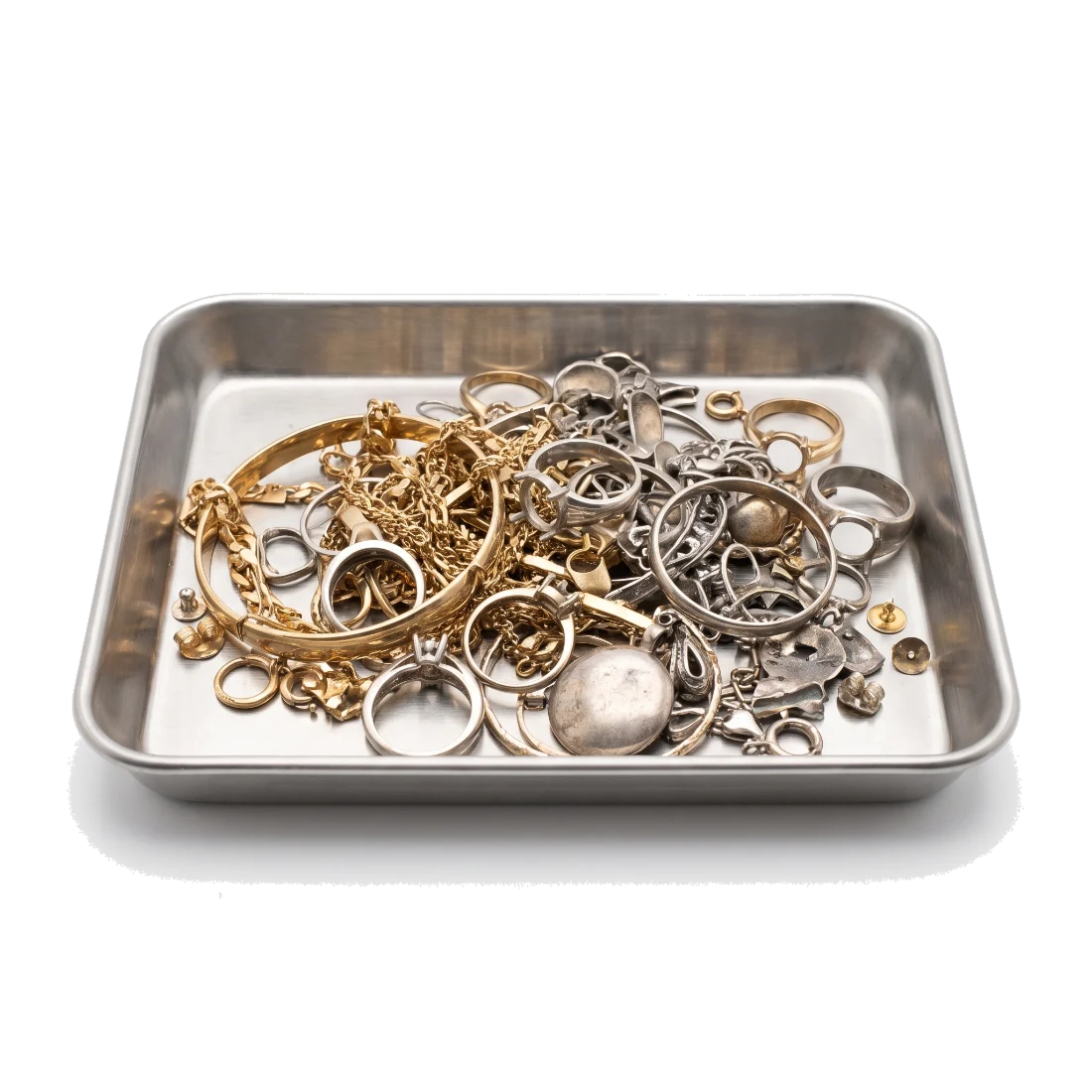
Scrap and bench material from the trade. Karat gold from 8K up, sterling and better, platinum settings and lab material.
- 10K
- 14K
- 18K
- 22K
- 24K
- SL925
- PLT900
- PLT950
Coin silver, fine silver and PLT999 are bought as well — the quote form carries them. Mixed lots are normal and are separated on camera before anything is weighed against your quote.